- 易迪拓培训,专注于微波、射频、天线设计工程师的培养

HFSS15: Tensor Entries
录入:edatop.com 点击:
Entering the matrices of the anisotropic materials doesn’t require a special procedure. The usual anisotropic material definitions can be used for any PML structure. However, keep in mind that the efficiency of the PMLs depends on the material values assigned to them.
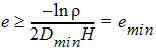
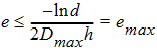
Setting the complex parameter C ensures that the electromagnetic field decays strongly in the PMLs. Back reflections from the bounding PECs are then kept below a prescribed bound. To accomplish this, the following inequalities have to be satisfied:
| 
| (1) |
| 
| (2) |
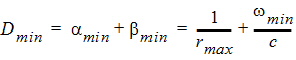
where
| 
| (3) |
| 
| (4) |
• e = a = b
• a  and b
and b  are the real and imaginary parts of C.
• H  is the thickness of the PML object.
• wmax  and wmin
  are the minimum and maximum angular frequencies.
• rmax  and rmin
  are the minimum and maximum distance of a radiating object to the PML surface.
• r  is the bound for back reflection.
• d  is the maximum decay characterizing the element. (d
  is approximately 3* 10-3.)
• h  is the thickness of one finite element.
• c  is the velocity of light in vacuum.
HFSS 学习培训课程套装,专家讲解,视频教学,帮助您全面系统地学习掌握HFSS
上一篇:Testing GetSchedulerDisplayName and GetThisJobID
下一篇:Testing GetTempDirectory