- 易迪拓培训,专注于微波、射频、天线设计工程师的培养

HFSS15: TDR Windowing Functions
录入:edatop.com 点击:
Windowing functions cause the FFT of the signal to have non-zero values away from w. Each window function trades off the ability to resolve comparable signals and frequencies versus the ability to resolve signals of different strengths and frequencies. The window type list includes:

Window Function | Preferred Use |
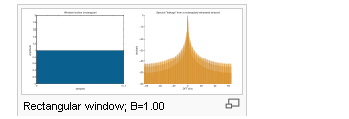
Rectangular | A low dynamic range function offering good resolution for signals of comparable strength. Poor when signals have very different amplitudes. w(n)=1.
 |
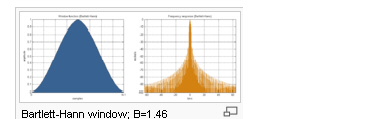
Bartlett | A high dynamic range function, with lower resolution, designed for wide band applications.
where a0=0.62; a1=0.48; a2=0.38
 |
Blackman | A high dynamic range function, with lower resolution, designed for wide band applications.
where a0 =(1-a)/2; a1=1/2; a2=a/2 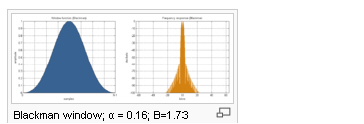 |
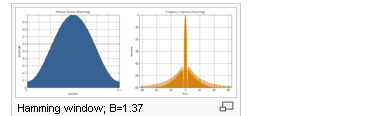
Hamming | A moderate dynamic range function, designed for narrow band applications. It minimizes the maximum sidelobe.
 |
Hanning (default) | A moderate dynamic range function, designed for narrow band applications.
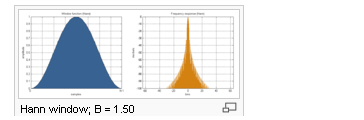 |
Kaiser | Selecting the Kaiser plot also enables a field to specify an associated Kaiser parameter. The larger the Kaiser parameter, the wider the window. The parameter controls the trade off between width of the central lobe and the area of the side lobes.
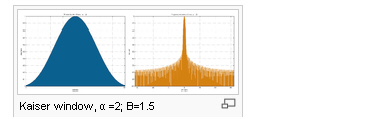
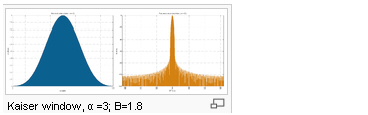 |
Welch | This approach applies a parabola-shaped window to the frequency domain data. It is based on the Bartlett method but splits the signal into overlapping segments, which are then windowed. The intent is to balance the influence of data in the center of the function. |



You can use the Save as Default to set the current values as a default, and the Use Defaults
HFSS 学习培训课程套装,专家讲解,视频教学,帮助您全面系统地学习掌握HFSS
上一篇:Terminals and Modes
下一篇:Terminals Theory